
The Missing Card
There was a card missing.
I noticed because the work was already upright. When the cards are still lying loose, a gap means very little. It might be deliberate. It might be waiting for something. It might simply mean I have gone upstairs for coffee.
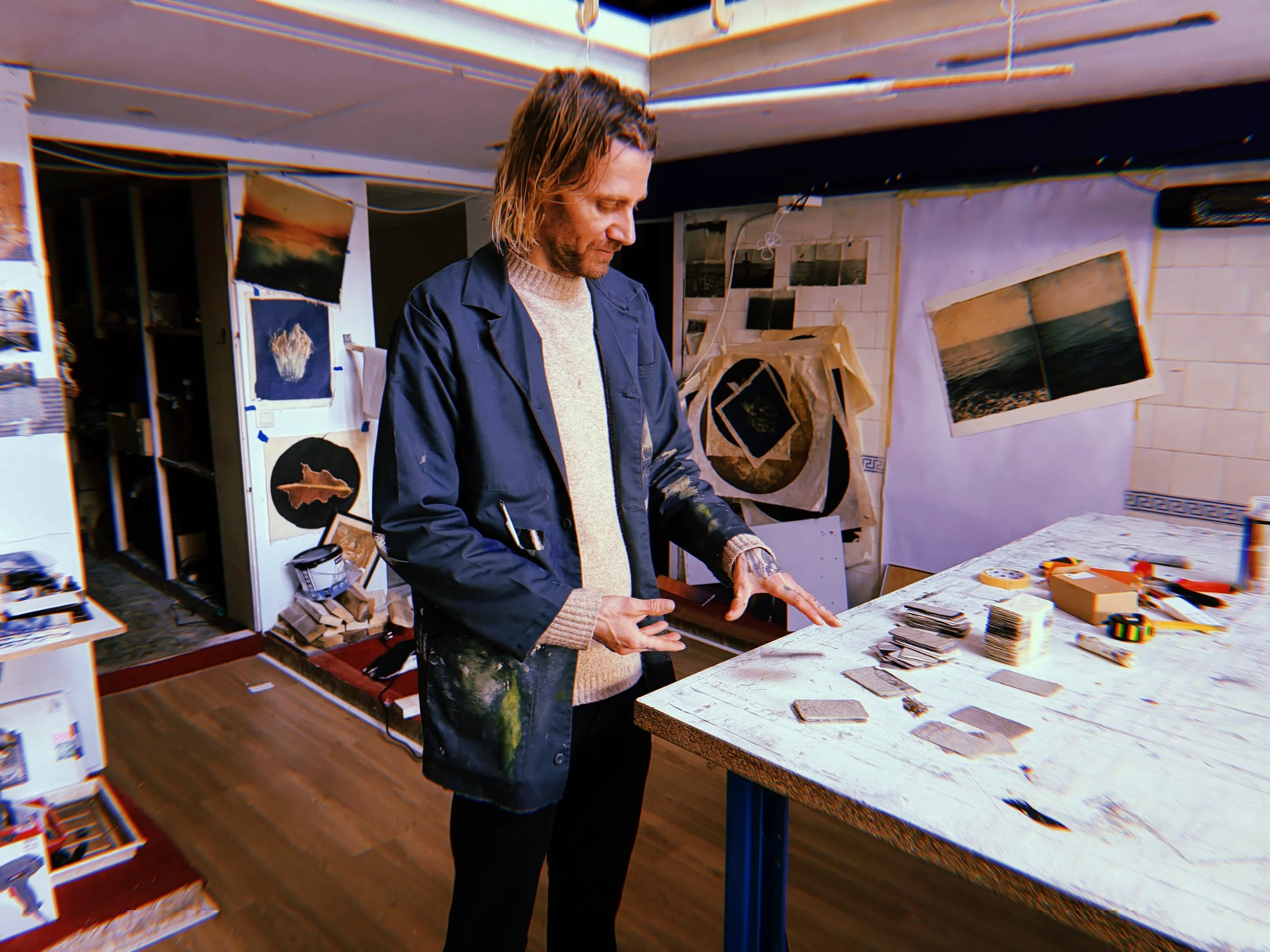
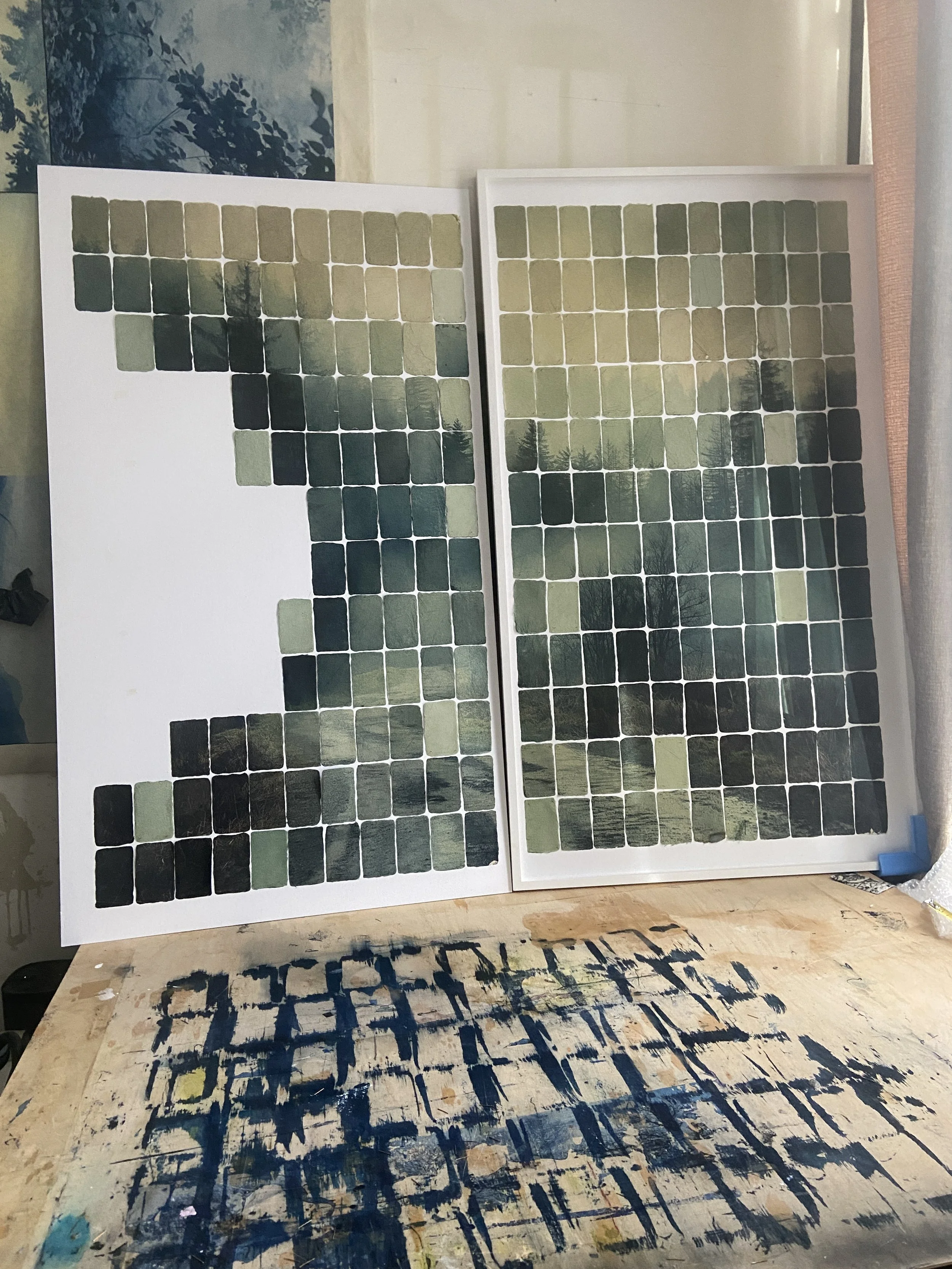
This gap was different. The other cards had been fixed with four pins each. They had stopped moving. Together they formed a landscape, and somewhere within it was a small empty rectangle.
The card could not have fallen. Or it could have fallen, but only if I had forgotten the pins. Gravity had a better alibi than I did.
The gap was small. That was part of the problem. A larger gap might have looked deliberate. This one looked exactly like what it probably was: something I had done and then forgotten about.
I stepped back, which was useless. From there, the landscape still worked, except for the gap, which was now the only thing I could see.
I stood in front of it.
Perhaps I had taken the card out myself. Perhaps I had noticed something wrong, removed it and become distracted before finding a replacement. Every explanation involved me doing something I could not remember doing.
I tried to remember the work before the gap. This should not have been difficult. I had spent days looking at it. I could remember the work being complete. I just could not remember the card that had made it complete.
I had hundreds of other cards. Finding a card to fill the space would have taken less than a minute. Finding this particular card was another matter.
All the cards were the same size, so the practical problem was simple. The practical problem was not the problem. The work had passed the point where the cards were still possibilities. This particular one had become necessary.
They are all landscapes, although some require more imagination than others. A close photograph of rough water can lose its scale completely. Away from the place where it was taken, the surface might just as easily be rock, cloud or the side of a mountain. When I place it among other cards, I can use the water as part of that mountain. It does not have to remain what it was.
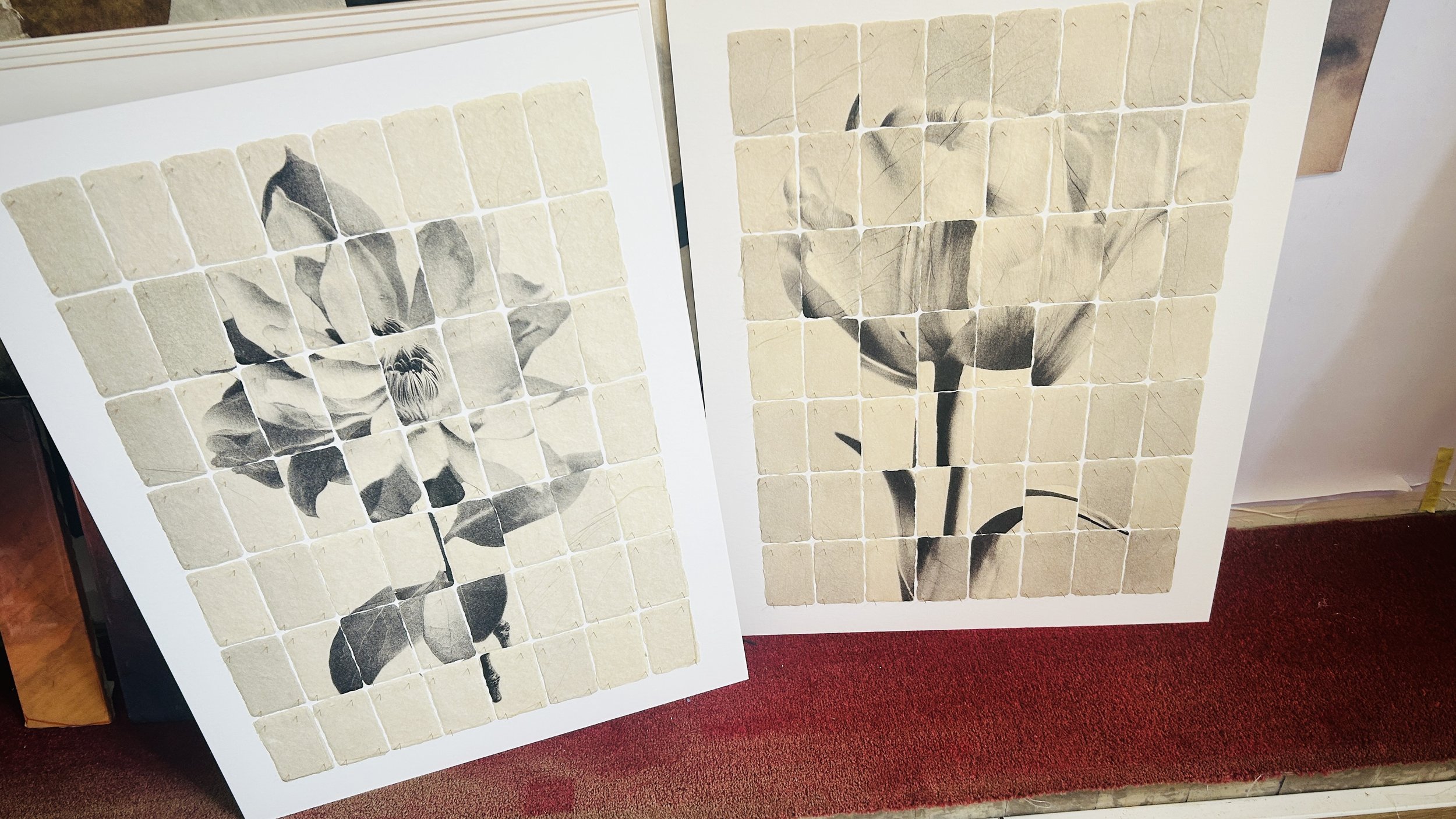
Each card comes from a different photograph, or a different part of one. Placed together, they stop insisting on where they came from and form somewhere else.
Before they go into a work, the cards are less decided. Water can become a mountain. A mountain can become a shadow. Something photographed as sky can end up near the bottom and work perfectly well as snow. The card does not object.
Usually it changes because of what I put next to it. A piece of water beside a dark slope starts to look like the lower part of a mountain. Move it beside something pale and it may become sky again. This is useful, because I often need water to be a mountain and have no intention of driving back.
Once the work is upright, these decisions look obvious. A grey mark carries on into the next card and becomes the edge of a mountain. Take one card away and it goes back to being two grey marks, except that one of them is now missing.
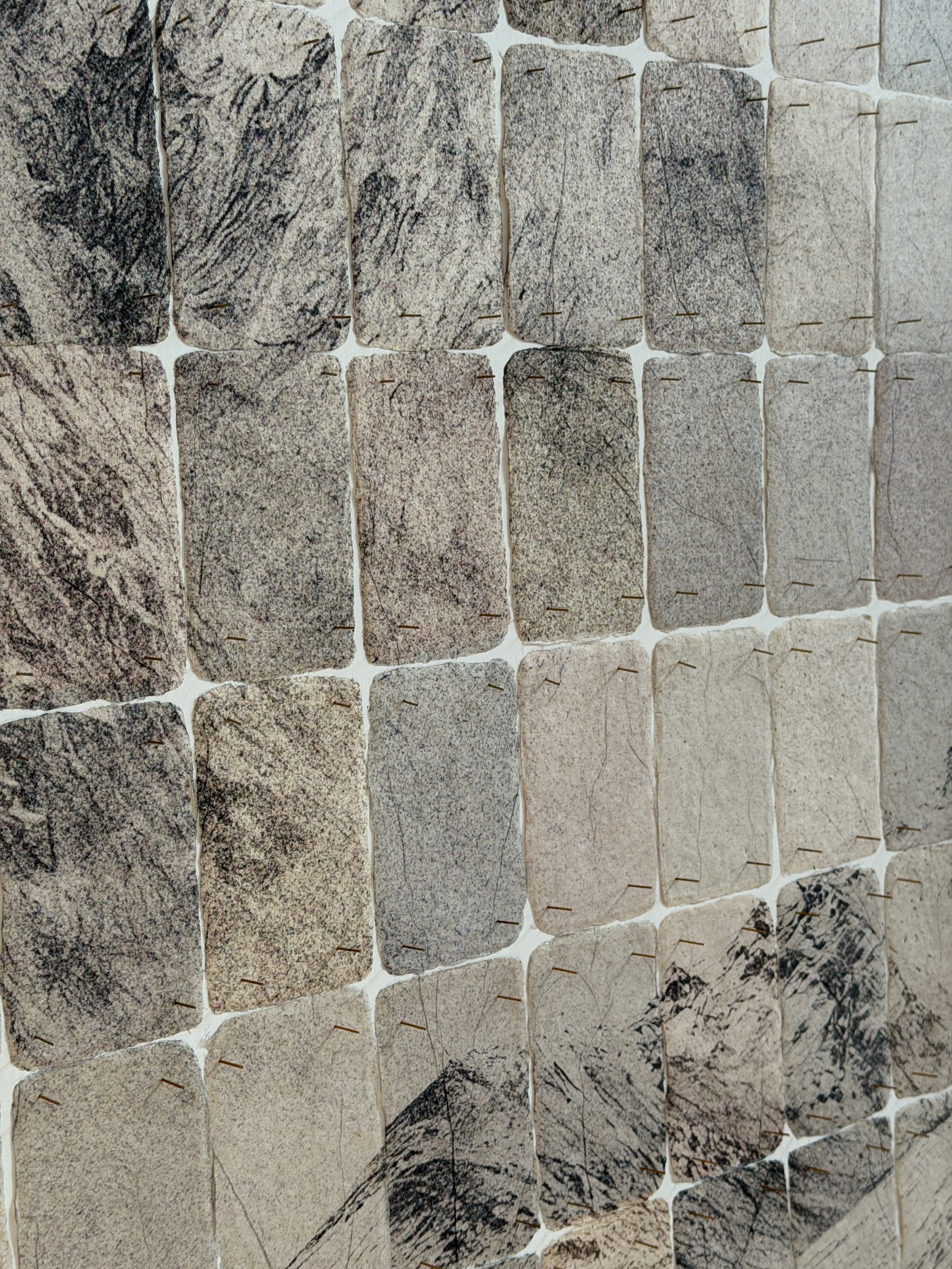
The missing card had belonged to that somewhere so completely that I could no longer picture it on its own.
On its own, though, the missing card would also have looked complete.
Inside the work, I had stopped seeing the card itself. I saw the line it carried and the colour it corrected.
Still, I knew what it looked like. At least, I did when I started looking for it.
I looked under the table. There were several cards there, but none was the one I needed. I checked between sheets of paper, along the wall and inside the containers where unused cards tend to gather. I never throw away a card. This is less noble than it sounds. Every card might become necessary later. Most have spent years not becoming necessary, but this is not yet evidence.
Among them was a grainy image of a small tree that I had been saving for five or six years. Its blacks contained exactly the detail I used to look for in the darkroom. It could belong almost anywhere, so I always saved it for the next work. Each time it reappeared, I thought, This is it. Then: Oh, it’s this one.
I lifted sheets of paper so thin they obviously could not conceal a card beneath them. I knew this while I was lifting them. It did not stop me.
At first, I searched sensible places. The floor. The table. The narrow space between the work and the wall. When the sensible places failed, I moved on to places that made no sense. I did not think the card would be there.
This was how a drawer too small to contain a card began to look suspicious. It was also why I checked the floor a third time. The first two checks had clearly been below standard.
Then I checked under the table again.
There is something reassuring about the bigger picture. From a distance, it gives the impression that everything has found its position. The mountains are where mountains should be. The horizon continues. Nothing important appears to be missing.
When I was younger, I carried another picture with me. It contained a studio, work I believed in, exhibitions and books. It was detailed in the places where detail was flattering.
There was a later version of me inside it. He was calm at openings, answered emails without rewriting them six times and could abandon an idea before it had wasted a month. I thought of him as me, only slightly delayed.
The picture did not contain the delay. It had finished works but none of the mornings in which the work refused to begin. It had books but no afternoons spent wondering whether a short email had sounded strange.
I could see where I was supposed to arrive. The road was missing.
When something went well, I held it against the larger picture and found the part that had not happened. This was an efficient way of making nearly every achievement smaller.
It is difficult for a Tuesday afternoon to compete with an imagined life.
I looked behind a stack of frames.
Nothing.
By this point, the image on the card had begun to change. What had been a dark area became a mountain, then water. For a few seconds, each version felt correct. I could no longer tell whether the right card had already passed through my hands.
I tried other cards in the gap. One continued the horizon but changed the weather. Another made the centre too dark. A third worked perfectly and may even have been better than the original, which was annoying.
The work was finished. I had decided what belonged there. Replacing the card with a better one would have meant admitting that it had not been finished after all, and I had already moved on to the much more comfortable position of believing that it was.
While I am making a work, moving a card is normal. Once I have decided it is finished, moving the same card feels like vandalism. The pins prove nothing. They just make me less willing to admit that.
For a moment, I considered leaving the new card. The gap would be gone. The work might improve. The missing card, if it returned, could join the hundreds of other cards waiting for another place. Nothing material would be wasted.
If I kept it, the work would be better and wrong. I would know it had changed because I had lost something. This mattered more than improvement.
People often tell you to concentrate on the smaller steps. This is usually sensible advice and almost always annoying. The bigger picture is much more attractive. It is already finished. It contains no Tuesday afternoons, no unanswered emails, no anxiety about ever getting somewhere and no journeys made for reasons that later turn out not to matter.
The smaller pieces were less cooperative. Some were disappointing. Some appeared to belong to the wrong picture entirely. For years I treated these pieces as the untidy interval before life began.
Occasionally I forgot to do that. A morning was allowed to be only a morning. A decision led nowhere and did not immediately require a larger explanation.
I checked the floor again.
I moved the table.
I opened boxes I had not used for months.
The studio looked as if I had been searching for something much larger. Boxes were open. Paper had shifted. Cards lay in small groups on the floor, each group briefly accused and then cleared. The gap in the work remained exactly as it had been.
The card had now changed several times without moving anywhere.
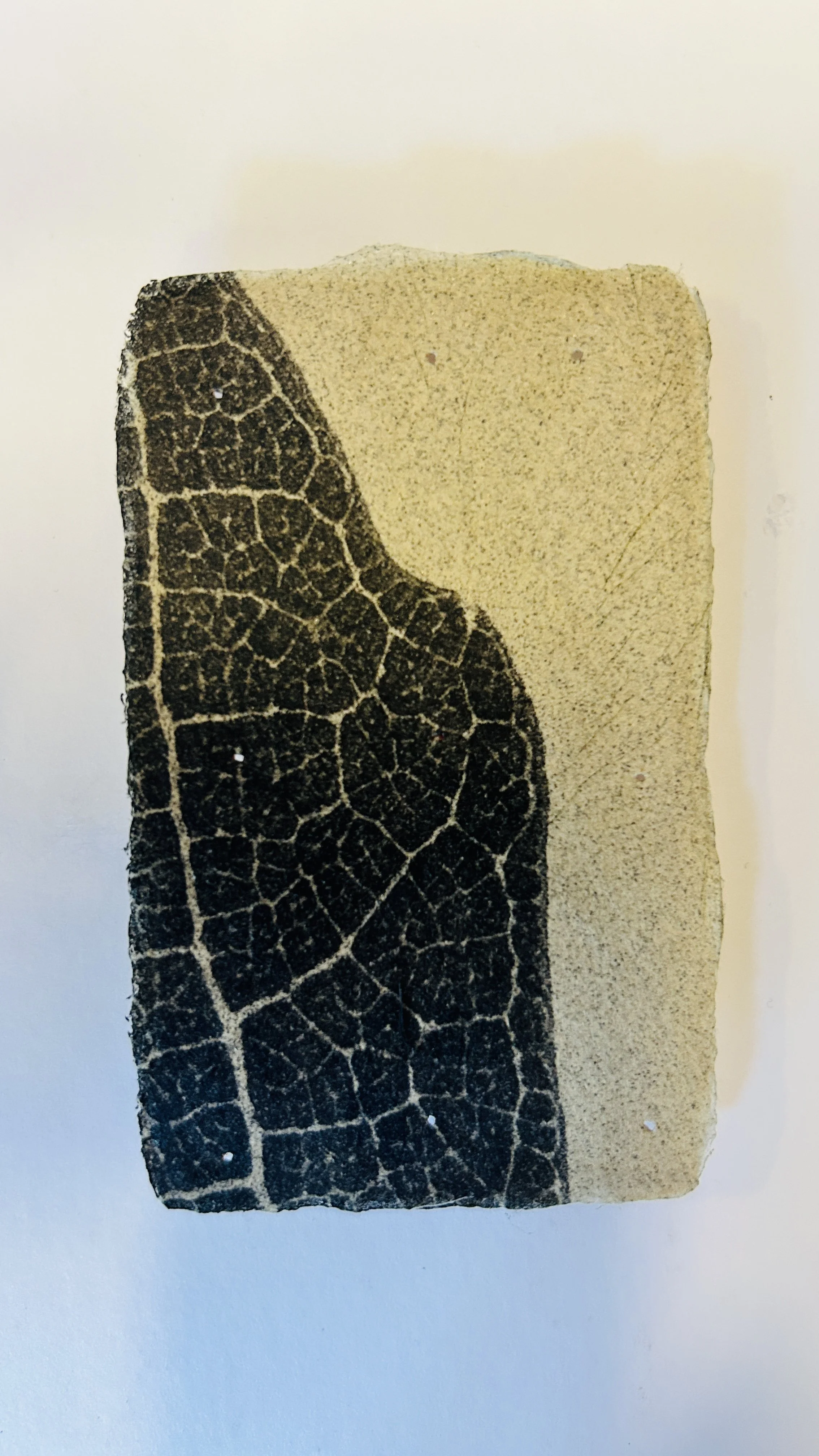
By then I knew the gap better than the card. I knew the narrow strip of white beneath it and the four points where the pins should have been. I could describe exactly what was not there. The card itself had become a rumour.
I had run out of places in which the card could reasonably exist.
Several days later, I put on a pair of trousers and felt something in the pocket.
It was the card.
Apparently, it had fallen from the work earlier. I had picked it up, put it somewhere safe and must have decided to put it back later. Then I had forgotten both the card and the act of saving it.
Putting something in a pocket feels safe because it stays close to you.
From Do That Again, a book of interconnected stories by Joost Vandebrug.
Related work: Pillow Book · Book of Hours