
Book of Hours
Through successive processes of transfer, enlargement and intervention, the distinction between the landscape and the material that holds it begins to dissolve. A crease becomes a mountain ridge, an imperfection resembles a passing cloud, a break in the image suggests a distant horizon. What began as an accident or consequence of making becomes inseparable from the world depicted.
The series explores the idea that an image is never entirely fixed. Each encounter, each intervention, alters what remains. Just as memory changes through the act of remembering, these landscapes are transformed through the repeated act of returning to them. Their imperfections are records of time, while their shifting forms suggest the impossibility of preserving any moment exactly as it was.
The title Book of Hours refers to the medieval prayer books structured around recurring moments of contemplation. Here, that rhythm becomes a way of considering photography as an ongoing relationship with an image rather than the preservation of a single instant.
Each work holds several moments at once: the moment photographed, the time spent making and remaking the image, and the present moment in which it is encountered.
The landscape becomes both an image of a place and a record of the time spent trying to hold onto it.
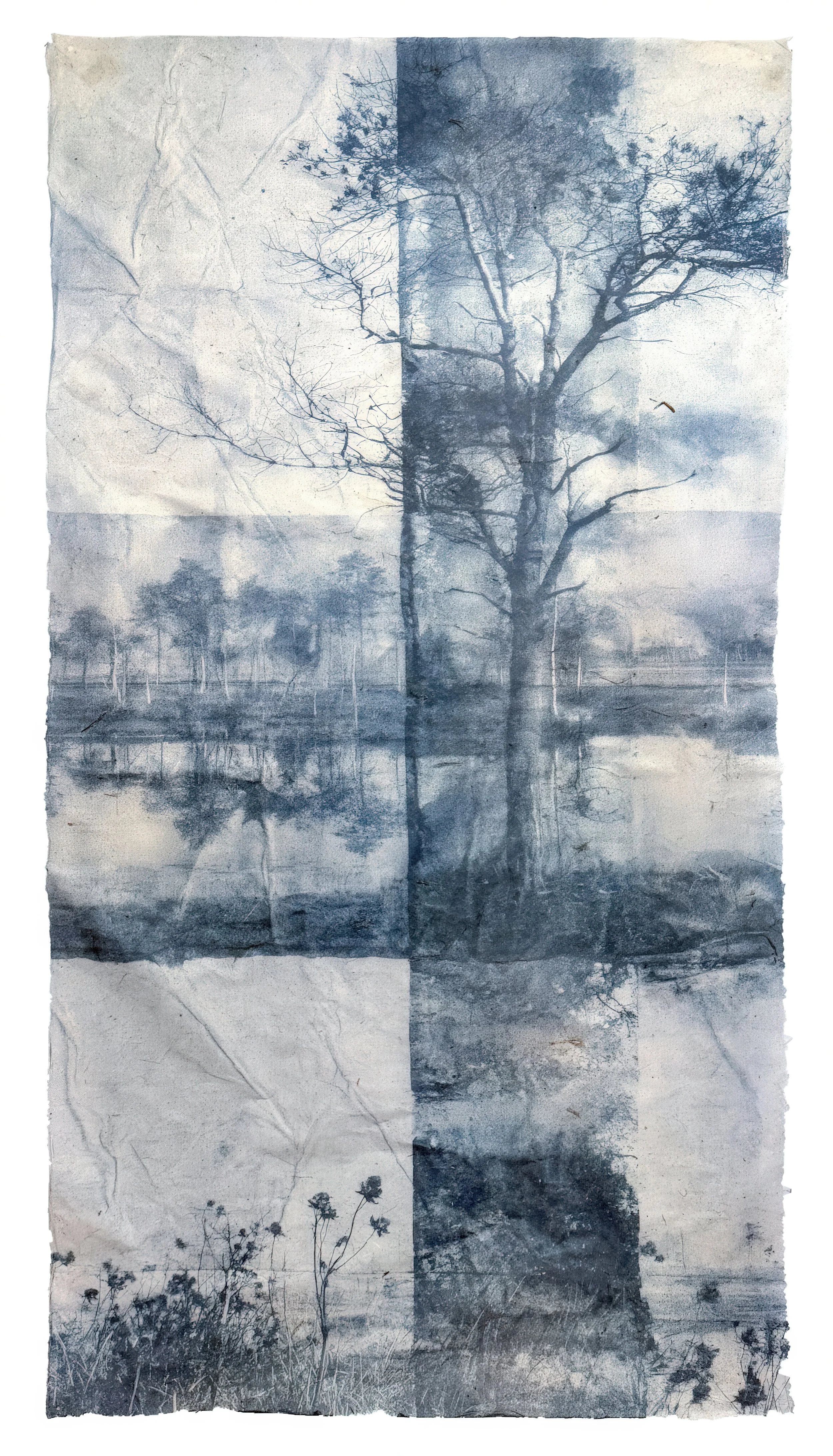
‘Multiple photographic emulsion transfers and graphite on Ban Shu Xuan paper, with 5 gsm washi repairs, derived from a 6 × 9 cm source fragment’.
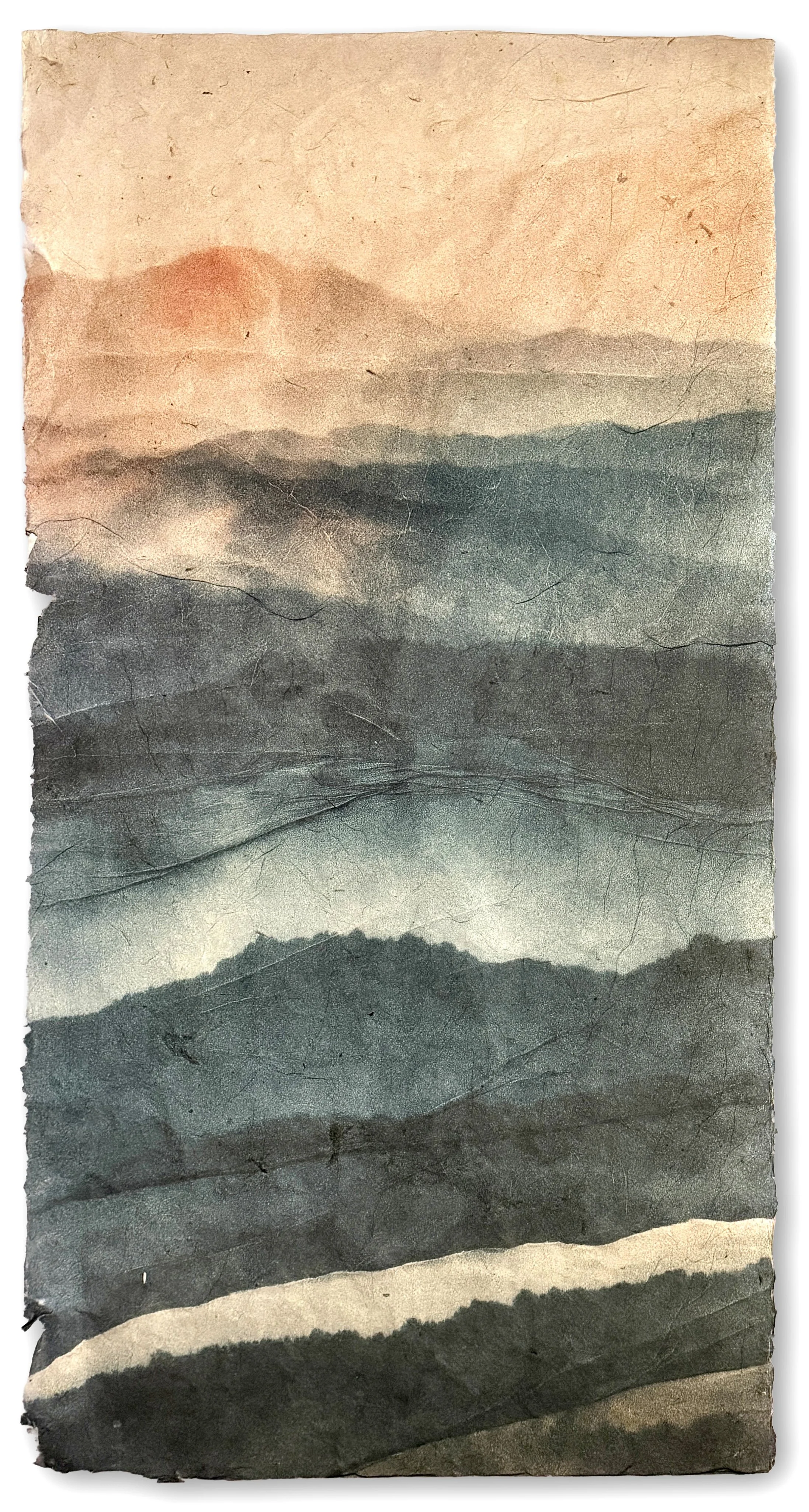
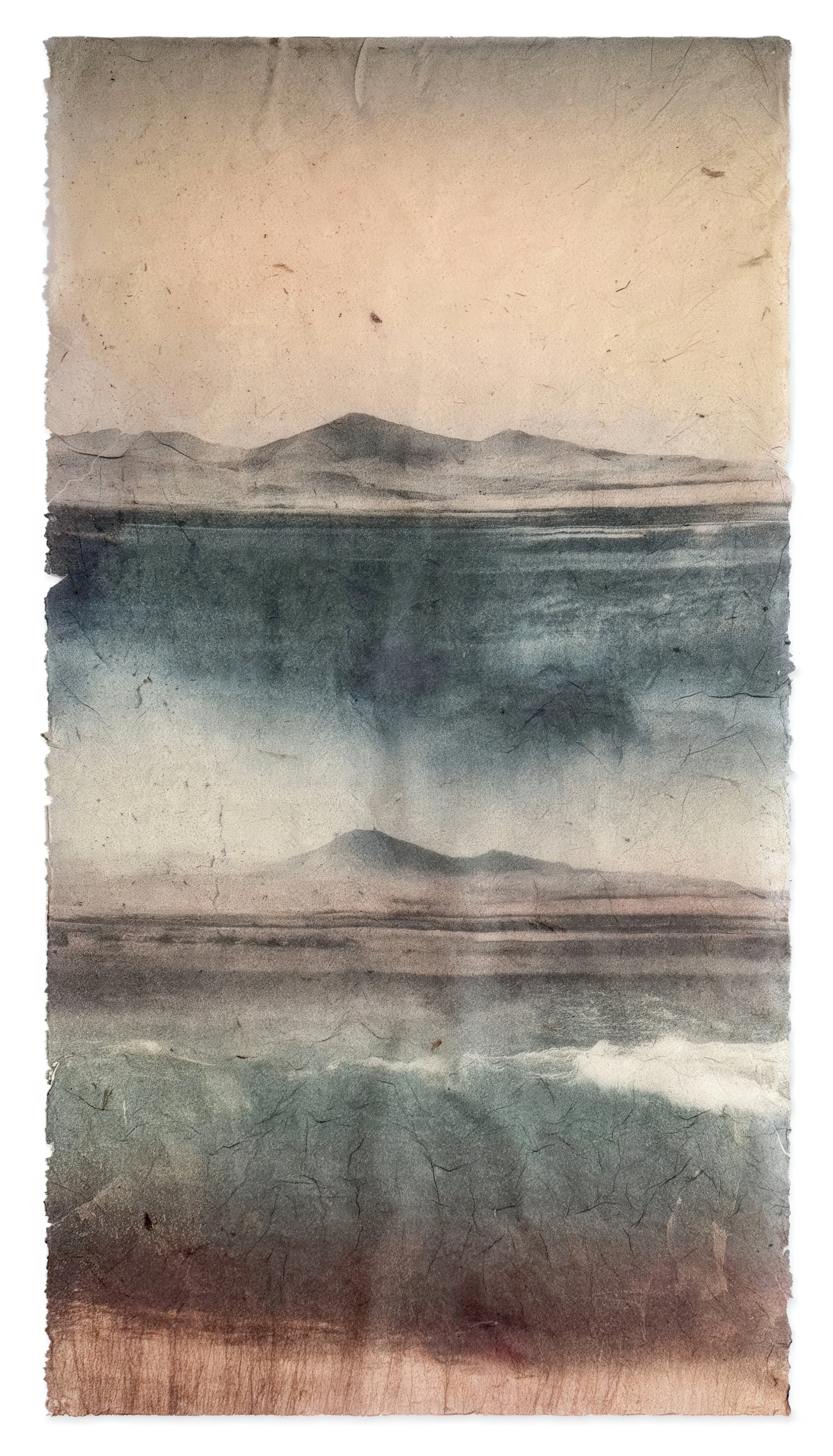
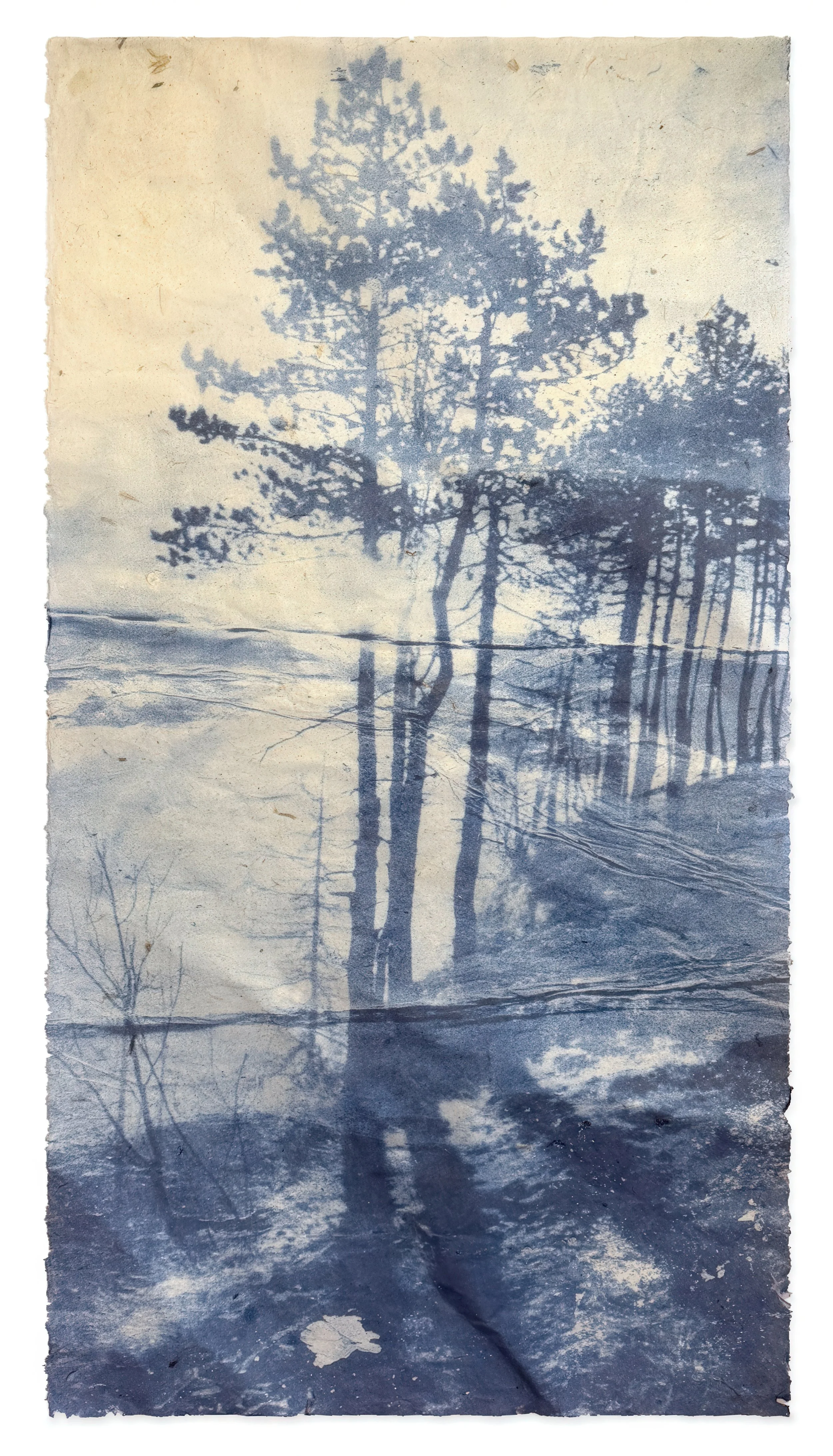
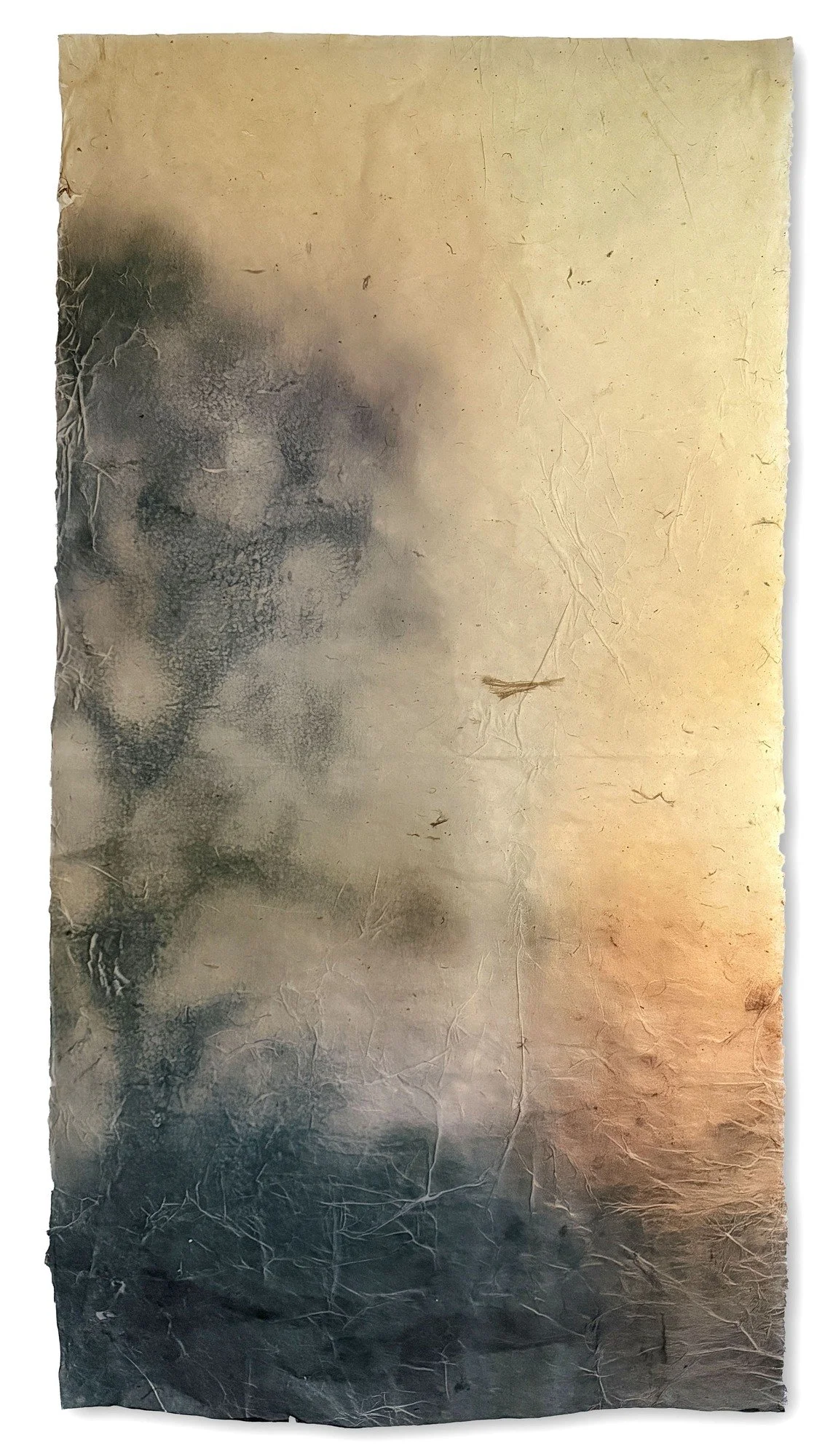
26-81, 2026
Book of Hours · 153 × 83 cm
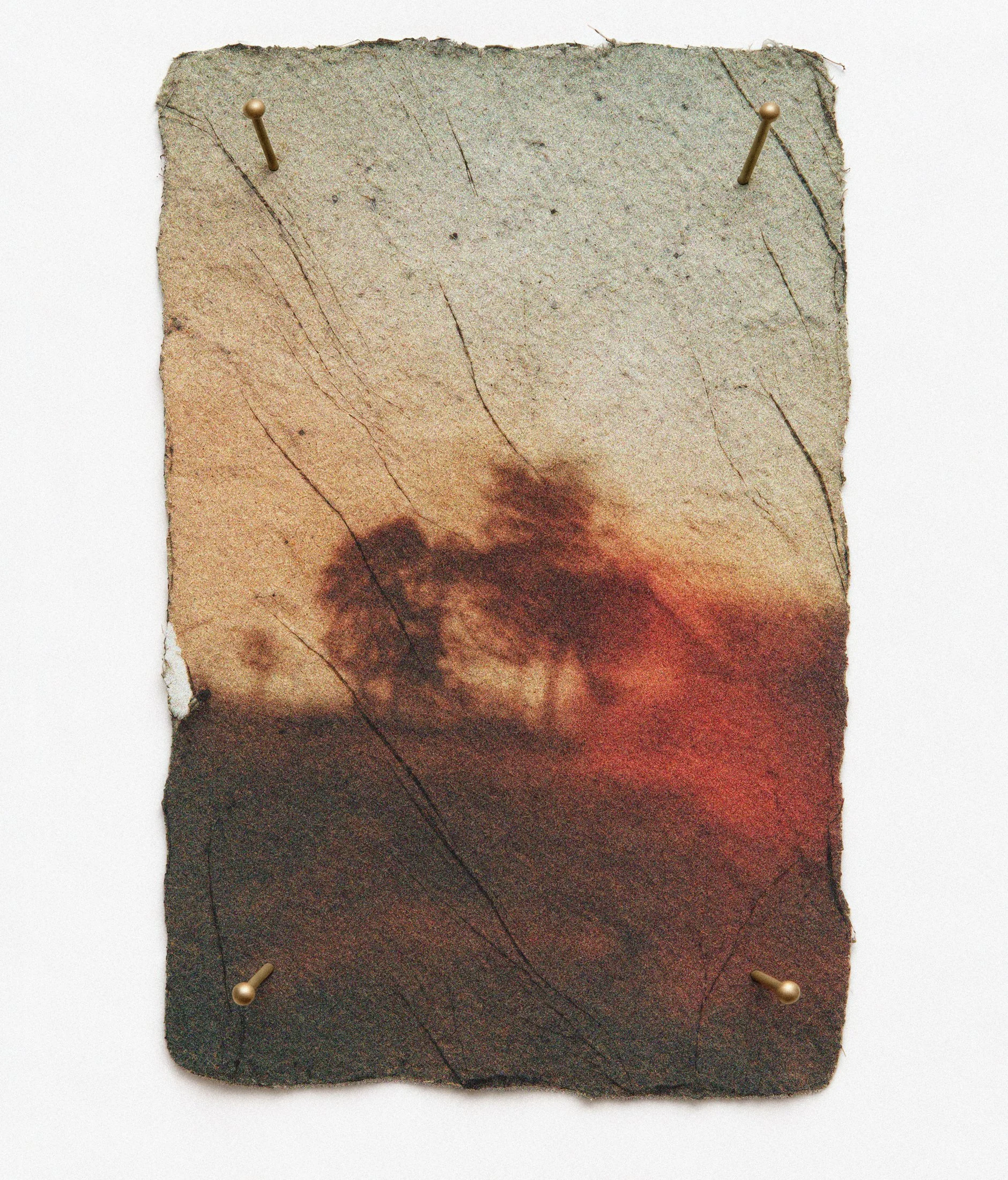
Original card · 6 × 9 cm
Example from the studio source material.
Images shown at different scales.
Individual 6 × 9 cm photographic cards, originally made as parts of larger compositions, become landscapes measuring 153 × 83 cm. Enlarged and reworked, their folds, joins and repairs begin to shape the places we see.